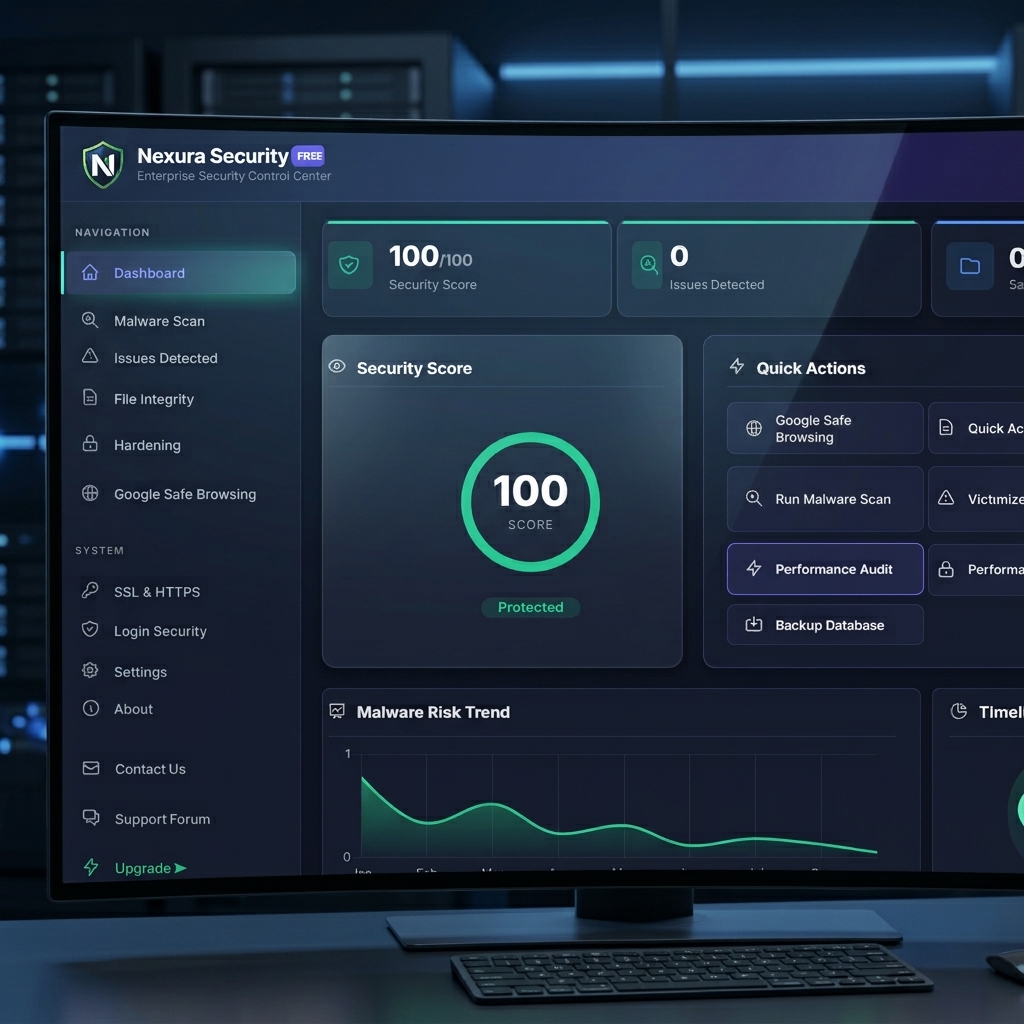
The Scope of the Research
In August 2026, the Nexura Security Threat Intelligence team conducted a massive automated scan across 10,000 randomly selected WordPress installations. Our goal was simple: to determine exactly how modern WordPress malware operates and where existing security solutions are failing.
Key Findings: The Infection Vectors
The data revealed a startling reality about how sites are compromised today. It's not zero-day exploits in core WordPress that are the biggest threat; it's the ecosystem.
Need immediate help?
If your site is currently hacked or showing warnings, our incident response team can help right now.
Initial Compromise Vectors
- 65% — Nulled or Abandoned Plugins
- 22% — Brute Force Attacks on WP-Admin
- 9% — Known Vulnerabilities in Active Plugins (Unpatched)
- 4% — Shared Hosting Cross-Contamination
Why Regex Scanners Missed 40% of Payloads
During our research, we ran traditional regex-based malware scanners against the infected sites. Shockingly, they completely missed 40% of the active backdoors. Why? Because hackers are using complex obfuscation techniques like variable variables and multi-stage base64_decode chains that regex patterns cannot reliably match.
This research underscores the critical need for AST (Abstract Syntax Tree) Tokenizer scanning, which reads the actual execution logic of the code rather than just string matching.
Upgrade to Nexura Pro
Get enterprise-grade protection. Block zero-day exploits, advanced malware, and brute-force attacks instantly.