SQL Injection (SQLi) is consistently ranked as one of the most dangerous web application vulnerabilities by OWASP. In the context of WordPress, a successful SQLi attack allows a hacker to read, modify, or delete any data in your MySQL/MariaDB database, effectively granting them total control over your website.
This comprehensive guide dives deep into the mechanics of SQL Injection in WordPress, how it happens in poorly coded plugins, and the exact steps you must take to secure your database against automated SQLi scanners and targeted attacks.
Need immediate help?
If your site is currently hacked or showing warnings, our incident response team can help right now.
1. Understanding SQL Injection in WordPress
WordPress relies on a relational database to store everything: users, passwords, posts, settings, and WooCommerce orders. When a web application takes user input (like a search query or a form submission) and inserts it directly into a database query without proper sanitization, it creates an SQL Injection vulnerability.
For example, if a vulnerable plugin uses this code:
Upgrade to Nexura Pro
Get enterprise-grade protection. Block zero-day exploits, advanced malware, and brute-force attacks instantly.
// DANGEROUS: Never do this!
$user_id = $_GET['id'];
$query = "SELECT * FROM wp_users WHERE id = " . $user_id;
$wpdb->query($query);
An attacker could pass id=1 OR 1=1 in the URL, forcing the database to return all users, bypassing intended access controls.
2. The Class: The Right Way to Query
WordPress provides a built-in database class called $wpdb. It is specifically designed to prevent SQL injection when used correctly. If you are a developer, you must always use $wpdb->prepare() before executing a custom query.
Secure Query Example
global $wpdb;
$user_id = $_GET['id'];

// SECURE: Using prepare() to sanitize input
$query = $wpdb->prepare(
    "SELECT * FROM {$wpdb->prefix}users WHERE id = %d",
    $user_id
);
$results = $wpdb->get_results($query);
By using %d (for integer) or %s (for string), WordPress automatically escapes the malicious characters, neutralizing the attack.
3. Real-World SQLi Vulnerabilities (CVEs)
SQL Injection is not a theoretical threat. Some of the most widely used WordPress plugins have suffered from severe SQLi flaws.
- CVE-2022-21661 (WordPress Core): A high-severity SQLi vulnerability was discovered in the WP_Query class in older versions of WordPress.
- CVE-2021-24811: A popular WooCommerce extension allowed unauthenticated users to inject SQL payloads via a REST API endpoint.
- CVE-2023-XXXX: A prominent forms plugin failed to sanitize user input in a hidden field, leading to database compromise.
Because these vulnerabilities are discovered frequently, relying solely on writing good code is not enough. You need defense in depth.
4. Hardening the Database Configuration
You can significantly reduce the impact of an SQLi attack by hardening your database infrastructure.
Change the Table Prefix
By default, WordPress tables start with wp_. Automated SQLi bots hardcode this prefix into their payloads (e.g., UNION SELECT user_pass FROM wp_users). Changing your prefix to something random like nxr_99x_ breaks these automated attacks.
Database User Permissions
The MySQL user account that WordPress uses should only have permissions to the WordPress database. It should never have global privileges (like GRANT or DROP DATABASE). Ensure the user is restricted to SELECT, INSERT, UPDATE, DELETE, CREATE, DROP, ALTER, INDEX on that specific database only.
5. Preventing SQL Injection with a Web Application Firewall (WAF)
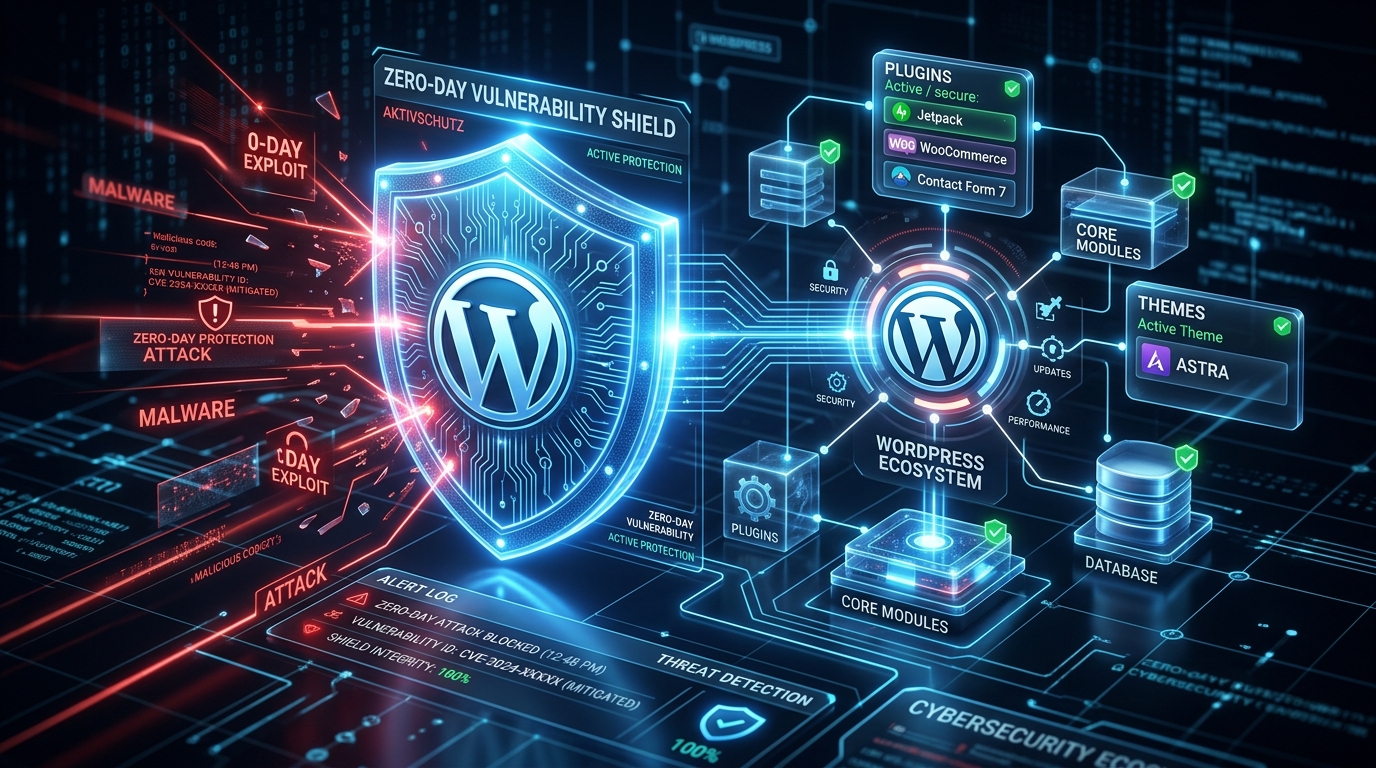
Because you cannot control the code quality of every third-party plugin you install, a Web Application Firewall is your most critical line of defense against SQLi.
A WAF inspects incoming HTTP requests (GET, POST, Cookies) for known SQL injection signatures, such as:
UNION SELECTOR 1=1WAITFOR DELAY(used in Time-Based Blind SQLi)CONCAT()andCHAR()obfuscation
How Nexura Security Pro Stops SQLi
Nexura Security utilizes an early-load WAF architecture. By hooking into the PHP execution lifecycle via auto_prepend_file, Nexura analyzes the incoming request before the WordPress core or any plugins are loaded. If an SQLi payload is detected, the connection is instantly dropped, ensuring the malicious request never reaches your database.
6. Automated Vulnerability Scanning
Since SQLi usually stems from outdated plugins, patch management is critical.
- Enable Auto-Updates: For trusted plugins, enable background auto-updates.
- Vulnerability Scanners: Use a tool that checks your installed plugins against the WPScan or Wordfence vulnerability databases daily.
- Remove Inactive Code: Deactivated plugins can still be targeted if their PHP files are accessible. Delete any plugin you are not actively using.
Conclusion
Securing your WordPress database from SQL Injection requires a multi-layered approach: writing secure code ($wpdb->prepare), hardening your MySQL privileges, changing default prefixes, and deploying a robust WAF to catch zero-day exploits in third-party plugins. By implementing these steps, you effectively neutralize one of the most critical threats to your web application.